Canada’s Work Permit and Temporary Foreign Worker Experts
Specialists in Labour Market Impact Assessments (LMIA), LMIA-Exemptions, Open Work Permits and International Skilled Worker Recruitment through the Temporary Foreign Worker Program
We specialize in solving work permit challenges for Canadian businesses and skilled workers.
Our focus is on simplifying these complex processes for employers and skilled workers alike.
With over a decade of experience, we have successfully assisted thousands of clients in overcoming immigration hurdles, ensuring compliance, and achieving their staffing goals.
We are your strategic partners dedicated to turning paperwork into powerful workforce solutions.
Zdenko, a Slovakian architect, contacted us while visiting Canada with a job offer from a local architectural firm. We successfully […]
Aquaculture Technician
Mario S.
Mexico
CUSMA Professionals – Scientific Technician
We successfully recruited Mario, an experienced aquaculture technician from Mexico, to join our client, an organic aquaculture farm in Tofino, […]
Cook
Fernanda G.
Mexico
LMIA-Program
We successfully secured an LMIA-based work permit for Fernanda, a Mexican national, to work as a cook at a busy […]
Long-Haul Truck Driver
Solomon C.
Philippines
LMIA-Program
We successfully recruited Solomon, a skilled Filipino transportation professional, while he was working in Lithuania during the COVID pandemic. Despite […]
Commercial Truck Mechanic
Jovito H.
Philippines
LMIA-Program
Jovito, a Filipino national, has a unique and inspiring story. Having worked for many years in Saudi Arabia, he held […]
Cost Engineer
Marco R.
Mexico
CUSMA Professionals – Engineer
We successfully recruited Marco, a Mexican national, to work as a cost engineer for our client in Surrey, B.C. With […]
Our Key Industries
Force Inspection Services
(Nisku, AB)
We successfully recruited and relocated a team of six Filipino CNC Machinists for their operations in Nisku and Grand Prairie. This helped them overcome a critical skill shortage, boosting production efficiency and meeting tight project deadlines.
Plett Truck Repair
(Langley, BC)
We recruited and relocated nine Filipino Commercial Truck and Transport Mechanics, enabling the company to restore 24-hour service coverage in their busy shop. This improvement in operational reliability and client service was instrumental in maintaining their competitive edge.
Creative Salmon
(Tofino, BC)
We addressed staffing shortages for Creative Salmon’s offshore organic salmon farm by recruiting and relocating a team of highly specialized aquaculture technicians from Mexico. This ensured continuity of operations and helped meet production targets.
Colombian Chef Program
Through the Canada-Colombia Free Trade Agreement, we expedited the recruitment of dozens of chefs, sous chefs, and chef de partie to work in Canada. This program reduced the paperwork and processing time by about 75%, significantly benefiting various restaurants across the country.
Glia Technologies
(Vancouver, BC)
We facilitated a robust intra-company transfer program between their subsidiary in Estonia and their Vancouver office, relocating their Engineering managers and several key staff. This seamless transfer helped them retain critical talent and supported their expansion strategy.
PBX Logistics
(Burnaby, BC)
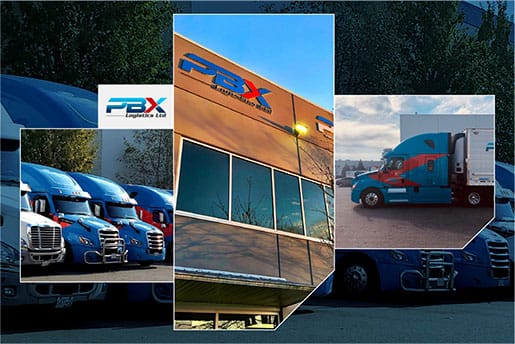
We helped PBX Logistics and their subsidiaries obtain authorizations to hire more than 100 foreign long-haul truck drivers. Our services covered everything from relocation and work permits to obtaining LMIAs, spouse work permits, and children’s study permits, even aiding some workers in transitioning to permanent residence and citizenship.
Van den Kerkhof and Sons Masonry
(Richmond, BC)
We obtained authorizations to hire skilled brickmasons from El Salvador, Philippines and Ireland, and work permits for Engineers from Mexico under challenging circumstances. Our support enabled the company to maintain its project timelines and quality standards.
Canada’s Work Permit and Temporary Foreign Worker Experts
Scroll to Top
Work Permits Explained
To work in Canada, you need the correct authorization. Generally, this comes in the form of a Canadian Work Permit. There are more than 100 different types of Canadian Work Permits, each with its own set of requirements and conditions. In many cases, there are situations where more than one type of work permit is available to you. Some are simpler than others to understand and obtain, with many being highly complex – requiring a deep understanding of Canadian immigration law to apply for.
Luckily, we’re experts in all aspects of the Canadian Work Permit process, with more than a decade of professional experience navigating the most complex sets of work scenarios for companies and the foreign nationals they hire.
Work Permits fall into one of two categories, either they are LMIA-required or they are LMIA-exempt.
An LMIA (Labour Market Impact Assessment) is an authorization that a Canadian company must receive from the government in order to hire foreign workers in specific roles. An LMIA is not a work permit!
LMIA-required
Once a positive LMIA is issued to the company, they can then add the names of workers that they want to hire on Canadian Work Permits. The LMIA is approved for a certain number of positions per application. (For example, 5 Truck Mechanics at a dealership in Edmonton, or 3 chefs at a restaurant in Vancouver.)
LMIAs are occupation and location specific. Therefore, a company with an approved LMIA for 5 Truck Mechanics at their dealership in Edmonton can’t use that LMIA to hire Truck Mechanics at their dealership in Calgary. Similarly, they couldn’t use the LMIA that was approved for Truck Mechanics to hire an Office Manager in Edmonton.
Once the names of recruited workers are added to the LMIA, applications for Canadian Work Permits can then be made to Immigration, Refugees and Citizenship Canada (IRCC). At this point, on the application for the work permit, workers must document their ability to perform the duties of the job that is being offered to them, in addition to meeting other admissibility and background requirements for entry to Canada.
Companies generally have 12 months to fill the spots on their approved LMIA.
LMIAs are needed both to hire and retain workers. Therefore, if a work permit holder has an expiring work permit, the company must obtain a new LMIA for their position in order for their work permit to be renewed.
The LMIA plus Work Permit combination is the default and traditional means of obtaining work authorization in Canada.
It can be used for any occupation, in any location, for workers from any nationality.
LMIA-based Work Permits are employer-specific, meaning that workers are only authorized to work for the employer named on the approved LMIA.
LMIA-exempt
But an LMIA-based Work Permit is not the only way to get a work permit in Canada. This is where LMIA-exempt work permits come into the picture – work permits that can be obtained without an LMIA.
The list of available LMIA-Exempt Work Permits is long, with the bulk of them being very niche and narrow in scope.
LMIA-Exempt Work Permits are either:
Open
Employer-Specific
1. Open Work Permits are just that, open. Meaning, that you can work for any employer, in any occupation, in any location in Canada.
The most popular Open Work Permits are Post-Graduation Work Permits, Spouse of High-Skilled Workers, and International Experience Canada – Working Holidays.
2. But most LMIA-Exempt Work Permits are not open, and are still employer-specific and are commonly issued under one of Canada’s many Free Trade Agreements. Usually, these Free Trade Agreements have provisions which permit the entrance of specific professionals into Canada without the need for an LMIA, such as Engineers from Mexico or Chefs from Colombia.
Some of the most popular LMIA-Exemptions are:
CUSMA (Canada United States Mexico Agreement)
Canada-Colombia Free Trade Agreement
Canada-Peru Free Trade Agreement
Comprehensive Trans-Pacific Partnership Agreement
Francophone Mobility Program
International Experience Canada – Young Professionals
Hiring workers through LMIA-Exempt programs is beneficial to Canadian employers as it offers a process with less expense and less government hassle.
This basic overview is just the beginning. The journey can be long and complicated both for the employers and the workers. Our focus is on simplifying and facilitating the process, legally and ethically, with the goal of ensuring our clients retain the best employees or careers possible. Contact us for more information about your situation and let us help you take the next steps forward!